Vitamins
Vitamin C (ascorbic acid)
Reviewed August 2026 · How we write these articles
Vitamin C, also known as ascorbic acid is a water-soluble vitamin that is an essential part of life. It has a molecular formula of C6H8O6 and a molecular mass of 176.12. In 1937 the Nobel Prize for chemistry was awarded to Walter Haworth for his work in determining the structure of ascorbic acid, and the prize for Medicine that year went to Albert Szent-Györgyi for his studies of the biological functions of ascorbic acid.
In its natural state, ascorbic acid appears in the form of a white to yellowish crystal or powder. Commercial vitamin C is often a mix of ascorbic acid, sodium ascorbate and/or other ascorbates. Because the vitamin is water-soluble, it must be regularly replenished and is commonly found in fresh fruits, especially in the citrus family that is dominated by oranges, lemons, limes, and tangerines. Vitamin C is also abundant in green leafy vegetables.
An essential nutrient found mainly in fruits and vegetables. The body requires vitamin C to form and maintain bones, blood vessels, and skin. Vitamin C is perhaps the most popular vitamin among the common nutrients and biochemicals. Ascorbic acid and its sodium, potassium, and calcium salts are commonly used as antioxidant food additives. Once ingested, vitamin C is readily absorbed by the intestines and continues its journey through the watery components tissues that make up the human body, helping to build collagen protein while doubling as an antioxidant along the way.
Together with flavonoids, polyphenolics and water insoluble compounds such as alpha-tocopherol (vitamin E), l-ascorbic acid contributes to the overall intake of "free radical scavengers" or "anti-oxidative metabolites" in the human diet. Ascorbic acid is easily oxidized and so is used as a reductant in photographic developer solutions (among others) and as a preservative.
Vitamin C (ascorbic acid) functions, uses, and health benefits
Vitamin C has multiple functions as either a coenzyme or cofactor. Vitamin C is responsible for helping to build and maintain our tissues and strengthening our immune system. Vitamin C is essential for the oxidation of phenylalanine and tyrosine, the conversion of folacin to tetrahydrofolic acid. Vitamin C may modulate prostaglandin synthesis to favor the production of eicosanoids with antithrombotic and vasodilatory activity. Vitamin C is required for synthesis of dopamine, noradrenaline and adrenaline in the nervous system or in the adrenal glands. Vitamin C is also needed to synthesise carnitine, important in the transfer of energy to the cell mitochondria. Ascorbic acid is required for collagen synthesis and has a structural role in bone, cartilage and teeth.
The antioxidant properties of vitamin C
Vitamin C is one of many antioxidants. Antioxidants are nutrients that block some of the damage caused by free radicals, which are by-products that result when our bodies transform food into energy. Vitamin C neutralizes potentially harmful reactions in the watery parts of the body, such as the blood and the fluid inside and surrounding cells. Vitamin C may help decrease total and LDL cholesterol and triglycerides, as well as increase HDL levels.
The antioxidant properties of vitamin C are thought to protect smokers, as well as people exposed to secondhand smoke, from the harmful effects of free radicals. Vitamin C strengthens the collagen structure of arteries, lowers total cholesterol, and blood pressure, an inhibits platelet aggregation.
Vitamin C and heart disease
Vitamin C may protect against heart disease by reducing the stiffness of arteries and the tendency of platelets to clump together. Long-term administration of vitamin C reverses endothelial vasomotor dysfunction in patients with coronary artery disease. Under most circumstances, dietary vitamin C is adequate for protecting against the development of or consequences from cardiovascular disease. When taken with vitamin E, vitamin C helps protect LDL ("bad") cholesterol from oxidation, thus preventing plaque buildup in coronary arteries. Individuals with high blood levels of vitamin C have significantly reduced risk of stroke.
The risk of stroke was inversely related to vitamin C in the bloodstream. Vitamin C improves nitric oxide activity. Nitric oxide is needed for the dilation of blood vessels, potentially important in lowering blood pressure and preventing spasms of arteries in the heart that might otherwise lead to heart attacks. Vitamin C has reversed dysfunction of cells lining blood vessels. The normalization of the functioning of these cells may be linked to prevention of heart disease.
Vitamin C and collagen, connective tissue
As a participant in hydroxylation, vitamin C is needed for the production of collagen in the connective tissue. These fibres are ubiquitous throughout the body; providing firm but flexible structure. Vitamin C is involved in the hydroxylation of proline to from hydroxyproline in the synthesis of collagen, a protein substance on which the integrity of cellular structure in all fibrous tissues depends. Collagen is the "glue" that strengthens many parts of the body, such as muscles and blood vessels. Collagen is a protein needed to develop and maintain healthy teeth, bones, gums, cartilage, vertebrae discs, joint linings, skin and blood vessels. Vitamin C is essential for the healing of wounds, and for the repair and maintenance of cartilage, bones, and teeth.
Vitamin C and immune system
Vitamin C may be useful as an immune stimulator and modulator in some circumstances. Vitamin C promotes resistance to infection through the immunologic activity of leukocytes, the production of interferon, and the process of inflammatory reaction, or the integrity of the mucous membranes. Vitamin C stimulates the immune system. Through this function, along with its antioxidant function, it may help in the prevention and treatment of infections and other diseases.
Other functions of vitamin C
Vitamin C has been reported to reduce activity of the enzyme, aldose reductase, in people. Aldose reductase is the enzyme responsible for accumulation of sorbitol in eyes, nerves, and kidneys of people with diabetes. Vitamin C levels in the eye decrease with age and that supplementing with vitamin C prevents this decrease, possibly leading to a lower risk of developing cataracts. Vitamin C may be helpful in protecting against some of the lipid oxidation caused by smoking. Vitamin C may be helpful in chronic diseases characterized by oxidative damage to biological molecules. People with recurrent boils (furunculosis) may have defects in white blood cell function that are correctable with vitamin C supplementation.
Vitamin C (ascorbic acid) dosage, intake, recommended daily allowance (RDA)
The recommended dietary allowance (RDA) for vitamin C in nonsmoking adults is 75 mg per day for women and 90 mg per day for men. For smokers, the RDAs are 110 mg per day for women and 125 mg per day for men. A dose of 200 milligrams daily is almost enough to maximize plasma and lymphocyte levels. Increased intakes of vitamin C are required to maintain normal plasma levels under acute emotional or environmental stress such as trauma, fever, infection, or elevated environmental temperatures. Full blood and tissue saturation is achieved with daily intakes of 200-500mg per day (in 2-3 divided doses).
Sources of vitamin C (ascorbic acid)
The body does not produce vitamin C, so it must be obtained through the diet and/or in the form of supplements. All fruits and vegetables contain some amount of vitamin C. Foods that tend to be the highest sources of vitamin C include green peppers, citrus fruits and juices, strawberries, tomatoes, broccoli, turnip greens and other leafy greens, sweet and white potatoes, and cantaloupe. Vegetables such as broccoli, sweet green and red peppers, potatoes (with skin), tomatoes, and Brussels sprouts are good sources. Cabbage and many dark green leafy vegetables are all good sources of vitamin C. Other excellent sources include papaya, mango, watermelon, brussels sprouts, cauliflower, cabbage, winter squash, red peppers, raspberries, blueberries, cranberries, and pineapples.
Raw and cooked leafy greens (turnip greens, spinach), red and green peppers, canned and fresh tomatoes, potatoes, winter squash, raspberries, blueberries, cranberries and pineapple are also rich sources of Vitamin C. Ascorbic acid is a relatively fragile molecule and it may be lost from foods during preparation, cooking, and/or storage. Ascorbic acid is easily destroyed by oxidation, particularly in the presence of heat and alkalinity, and because it is highly soluble in water, it is often discarded in cooking water. Although the vitamin occurs in small amounts in animal tissues, it is usually destroyed either by exposure to air or by processing before it reaches the table.
The best sources of vitamin C are fruits and vegetables. About 90% of vitamin C in the average diet comes from fruits and vegetables. Fruit sources of vitamin C include oranges, lemons, limes, grapefruits, tangerines, pears, bananas, melons, papayas, strawberries, mangos, blackberries, blueberries, kiwis, pineapples, watermelons, raspberries, cranberries, cantaloupes, rose hips, acerola cherries. Vegetable sources of vitamin C include asparagus, broccoli, green peppers, red peppers, cabbage, kale, cauliflower, potatoes, sweet potatoes, yams, squash, peas, turnips, turnip greens, onions, corn, pumpkins, carrots, parsley, sauerkraut.
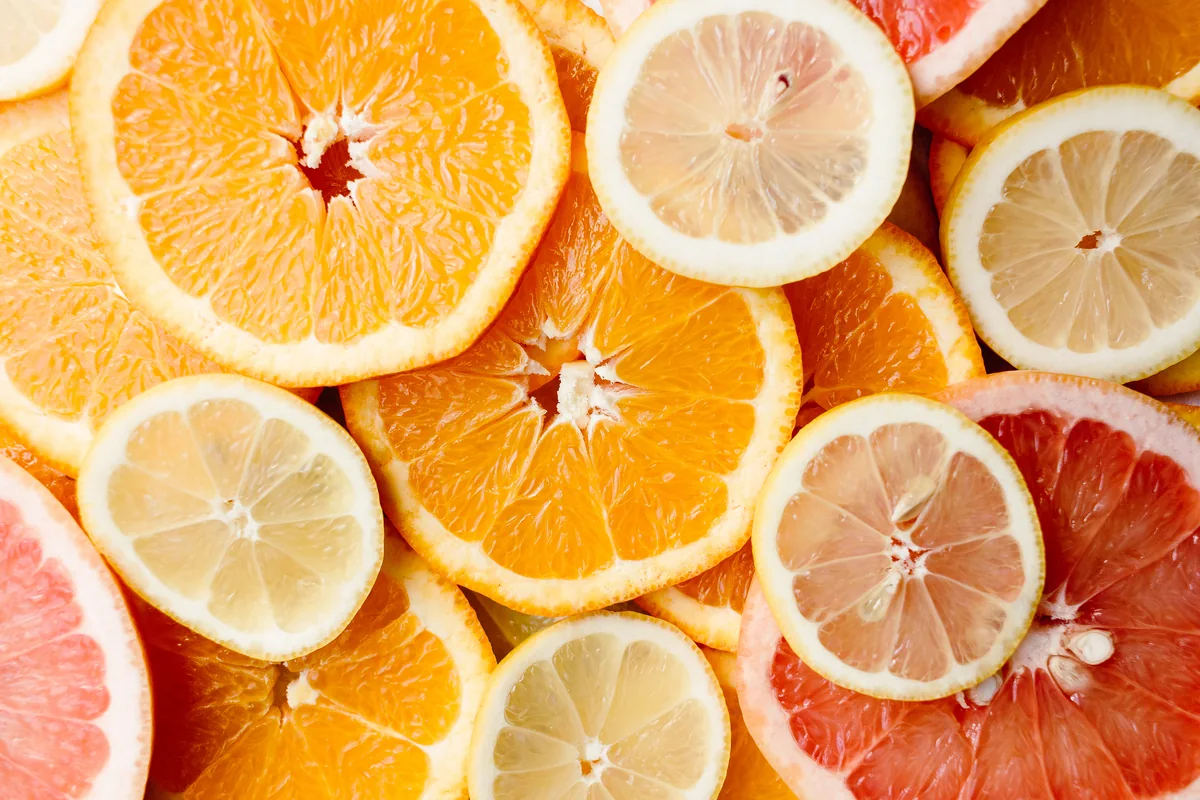
Citrus fruits such as oranges, orange juice, grapefruit, and tangerines are excellent sources. Melons, kiwi, and strawberries are high in vitamin C. Peppers - sweet green and red peppers and hot red and green chili peppers - are especially rich in vitamin C. Acerola is one of the richest sources of vitamin C in the world. Acerola also contains flavonoids, other vitamins, such as thiamine, riboflavin, niacin, pantothenic acid and beta carotene, and minerals, such as magnesium and potassium.
The amount of vitamin C in foods of plant origin depends on the precise variety of the plant, the soil condition, the climate in which it grew, the length of time since it was picked, the storage conditions, and the method of preparation. Cooking in particular is often said to destroy vitamin C - but see the section on Food preparation.
Vitamin C is sensitive to light, air, and heat, so it is best to eat fruits and vegetables raw, or minimally cooked in order to retain their full vitamin C content. Canned vegetables lose vitamin C during processing. Freezing has little effect on vitamin C. Cooking vegetables too long at high heats, for example boiling, can destroy vitamin C. Cutting and slicing fruits and vegetables leaves a greater surface exposed to air and light, which will also destroy vitamin C. Raw fruits and vegetables should be eaten shortly after they were cut. They should be cooked only for a short time in a small amount of water or by steaming. Aging and leaving fruits and vegetables at room temperature too long can also destroy vitamin C.
Vitamin C (ascorbic acid) deficiency
Vitamin C deficiency results in an underhydroxylation of proline and lysine in collagen which results in a lower melting temperature of the resulting collagen fibers which causes a breakdown of the protein collagen needed for connective tissue, bones and dentin, the major portion of teeth. Pregnancy, breastfeeding, gastrointestinal diseases, and hyperthyroidism increase the need for vitamin C. Other vitamin C deficiency symptoms include general weakness, fluid retention, depression and anemia. Vitamin C deficiency can also cause slower wound-healing, increased susceptibility to infections, male infertility and increased genetic damage to sperm cells, which may lead to birth defects.
A lack of vitamin C leads eventually to scurvy. Scurvy is a condition caused by a lack of vitamin C (ascorbic acid) in the diet. Signs of scurvy include tiredness, muscle weakness, joint and muscle aches, a rash on the legs, and bleeding gums. In the past, scurvy was common among sailors and other people deprived of fresh fruits and vegetables for long periods of time. The disease was especially prevalent in seamen on long sea voyages during the sixteenth and seventeenth centuries who primarily ate nonperishable foods that lacked this essential vitamin.
Vitamin C (ascorbic acid), a reducing agent, is necessary to maintain the enzyme prolyl hydroxylase in an active form, most likely by keeping its iron atom in a reduced state. Vitamin C is an essential nutrient for humans. Vitamin C is an important antioxidant vitamin involved in the development of connective tissues, lipid and vitamin metabolism, biosynthesis of neurotransmitters, immune function, and wound healing. It is found in fruits, especially citrus fruits like oranges, lemons, and grapefruit, and in green leafy vegetables like broccoli and spinach.
Collagen is a cementing material that binds cells together, and is an essential connective tissue protein in the body. Whenever the body is wounded, collagen glues the separated tissues together to form a scar. A lack of collagen causes the walls of the body's blood capillaries to break down and hemorrhaging occurs in cells throughout the body. When capillaries lose the "glue" that holds them together, symptoms of scurvy appear.
Vitamin C deficiency can lead to dry and splitting hair; gingivitis (inflammation of the gums) and bleeding gums; rough, dry, scaly skin; decreased wound-healing rate, easy bruising; nosebleeds; weakened enamel of the teeth; swollen and painful joints; anemia; decreased ability to ward off infection; and, possibly, weight gain because of slowed metabolic rate and energy expenditure. A severe form of vitamin C deficiency is known as scurvy, which mainly affects older, malnourished adults.
Symptoms of scurvy include inflamed and bleeding gums, petechiae, ecchymosis, follicular hyperkeratosis, coiled hairs, perifollicular hemorrhages, impaired wound healing, dry eyes and mouth (Sjögren's syndrome), arthralgia, joint effusions, muscle weakness, myalgia, fatigue, depression, frequent infections, anemia, anorexia, diarrhea, and pulmonary and kidney problems that can lead to coma and death. Basically, scurvy affects all systems of the body. A vitamin C deficiency can also result in anemia, in which there is a decrease in red blood cells, total amount of blood, or an iron containing substance in the blood called hemoglobin. If the vitamin C deficiency were severe enough, it would result in a disease called scurvy, which is characterized by tiredness, swelling, loosening of the teeth, hardening of leg muscles, and other unpleasant symptoms.
Vitamin C (ascorbic acid) overdose, toxicity, side effects
Vitamin C is water soluble and is regularly excreted by the body. While vitamin C is generally non-toxic, however, in high doses (more than 2,000 mg daily) it can cause diarrhea, gas, or stomach upset. At high doses, some people can experience gastrointestinal side effects such as stomach cramps, nausea, and diarrhea and may increase the risk of developing kidney stones. Intake of large amounts of vitamin C can deplete the body of copper, an essential nutrient. Vitamin C increases the absorption of iron and should be avoided by people with iron overload diseases.
Those who have kidney problems should check with a healthcare provider before taking vitamin C supplements. Infants born to mothers taking 6,000 mg or more of vitamin C may develop rebound scurvy due to a sudden drop in daily intake. People with hemochromatosis should not take vitamin C supplements because of enhanced accumulation of non-heme iron in the presence of this vitamin.