Vitamins
Vitamin A
Restored & last reviewed August 2026 · By the Vitamins & Supplements Guide editorial team
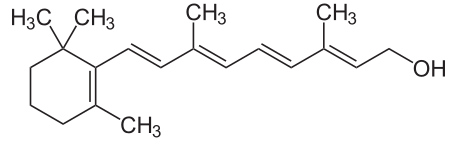
Vitamin A is the collective name for a group of fat-soluble vitamins. The most useable form of the vitamin is retinol, often called preformed vitamin A as it is the active form in the body. Retinol is chemically a pale yellow crystalline solid. Vitamin A palmitate (retinyl palmitate) and vitamin A acetate (retinyl acetate) are the principal forms used as nutritional supplements. Retinyl palmitate is a more stable version of retinol, however, because the skin has to further break down retinyl palmitate, much higher concentrations are required to provide the similar benefits.
When choosing between the two, it is better to go with the formula containing retinol rather than retinyl palmitate. The precursors of vitamin A (retinol) are the carotenoids (most commonly beta-carotene). Retinol, retinal, retinoic acid, and related compounds are known as retinoids. Retinal can be converted by the body to retinoic acid, the form of vitamin A known to affect gene transcription. Beta-carotene and other carotenoids that can be converted by the body into retinol are referred to as provitamin A carotenoids.
Vitamin A is structurally related to carotene. Carotene is converted into vitamin A (a safe source of vitamin A) in the liver, two molecules of Vitamin A are formed from one molecule of beta carotene. Vitamin A is manufactured by extraction from fish-liver oil and by synthesis from beta-ionone. Vitamin A is carried through the body by fat. The body can store this type of vitamin in fat tissue. The body obtains vitamin A in two ways. One is by manufacturing it from carotene, a vitamin precursor found in such vegetables as carrots, broccoli, squash, spinach, kale, and sweet potatoes.
The other is by absorbing ready-made vitamin A from plant-eating organisms. During the absorption process in the intestines, retinol is incorporated into chylomicrons as the ester form, and it is these particles that mediate transport to the liver. Storage of vitamin A in liver cells (hepatocytes) is via the ester derivative, but when retinol is needed in other tissues, it is de-esterifed and released into the blood as the alcohol. Retinol then attaches to a serum carrier, retinol binding protein, for transport to target tissues. A binding protein inside cells, cellular retinoic acid binding protein, serves to store and move retinoic acid intracellularly
Vitamin A functions, uses, and health benefits
Vitamin A is one of the most versatile vitamins, with roles in such diverse functions as vision, immune defenses, maintenance of body linings and skin, bone and body growth, normal cell development, and reproduction. Vitamin A helps form and maintains healthy teeth, skeletal and soft tissue, mucous membranes, and skin. Thus vitamin A and related nutrients may collectively be important in protecting against conditions related to oxidative stress, such as aging, air pollution, arthritis, cancer, cardiovascular disease, cataracts, diabetes mellitus and infection.
Retinol also functions in the synthesis of certain glycoproteins and mucopolysaccharides necessary for mucous production and normal growth regulation. This is accomplished by phosphorylation of retinol to retinyl phosphate which then functions similarly to dolichol phosphate. Vitamin A is essential to normal growth. Vitamin A is necessary for cell growth and cell differentiation - the process by which a cell changes its structure and develops specific functions. It plays important roles in resproduction, bone growth and tooth development.
Vision and sight
The foremost and important role of vitamin A is for eyesight in such a way that a Vitamin A compound is required in the transformation of the light's reception in the retina to be assimilated by the brain to convey a picture. One form of vitamin A, retinol, is required to start the chemical process that signals the brain that light is striking the eye, which allows the eye to adjust from bright to dim light.
In retina rods, retinal, a derivative of retinol, combines with rodopsin to form a complex that is highly sensitive to light. When might hits this complex, it dissociates releasing an amount of energy which will stimulate nerve termination in retina depth. This captor will transmit an image to the brain by optic nerves. One of the earliest sign of vitamin A deficiency is night-impaired sight.
Immune system
Vitamin A plays a key role in the immune system by helping protect from infections. Vitamin A boosts the immune system by stimulating white blood cell function and increasing the activity of antibodies (proteins that attach to foreign proteins, microorganisms, or toxins in order to neutralize them). The immune system helps prevent or fight off infections by making white blood cells that destroy harmful bacteria and viruses. Beta-carotene is an antioxidant. Antioxidants destroy free radicals, which are unstable substances that can react with and damage cells, tissues and organs. Free radicals are believed to be associated with many of the degenerative changes seen with aging. Free radicals are oxygen by-products produced when body cells burn oxygen. A build up of free radicals can damage body cells and tissues.
Epithelial cell
Vitamin A is needed by all epithelial tissue. Vitamin A helps protect the skin and tissues inside and outside of the body. The skin and all of the protective linings of these areas serve as barriers to infection by bacteria and to damage from other sources. Vitamin A maintains the health of epithelial cells that line internal and external surfaces of the lungs, intestines, stomach, vagina, urinary tract and bladder, eyes and skin. These cells act as important barriers to bacteria.
Certain epithelial cells secrete mucous to keep the skin, eyes and other mucous membranes moist. Vitamin A works at the genetic level to promote the process of cell differentiation, which allows each type of cell to mature so that it is capable of performing a particular function to help bar infections from taking hold. Many epithelial cells produce mucus which is necessary to lubricate body surfaces and protect against invading micro-organisms.
Pregnancy
Vitamin A is particularly essential for pregnant women because it helps with postpartum tissue repair, as well as maintaining normal vision and helping fight off infections. A lack of vitamin A during pregnancy can cause night blindness in the mother, problems with the placenta and low birth weight of newborns. There is emerging evidence that vitamin A plays crucial roles in embryonic development, and some believe it will eventually be used to prevent teratogenesis under some circumstances.
Because of its vital role in cell development and differentiation, adequate vitamin A helps to ensure that the changes which occur in the cells and tissues during fetal development take place normally. It may be involved in cell to cell communication. Pregnant women, however, should not use doses of vitamin A greater than the U.S. RDA (5,000 IU/day) without a physician's recommendation and supervision.
Anti-infection
Known as 'the anti-infective vitamin', vitamin A plays an essential role in protecting your body from infection. It keeps body surfaces healthy so they can act as barriers to invading micro-organisms. Vitamin A deficiency is often seen in HIV-positive people and this may be due to metabolic changes associated with HIV infection. Skin and membrane alteration partly explain increased sensitivity to infection during vitamin A deficiency. Even marginal deficits may induce modifications of lung membranes. Vitamin A stimulates and enhances many immune functions including antibody response and the activity of various white blood cells such as T helper cells and phagocytes. This immune-enhancing function promotes healing of infected tissues and increases resistance to infection.
Vitamin A dosage, intake, recommended daily allowance (RDA)
Vitamin A is measured in retinol equivalents (RE) which allows the different forms of vitamin A to be compared. The two primary forms of vitamin A are retinyl acetate and retinyl palmitate. One retinol equivalent equals 1 mcg of retinol or 6 mcg of beta carotene. Vitamin A is also measured in international units (IU) with 1 mcg RE equivalent to 3.33 IU. The recommended daily allowance (RDA) of vitamin A is 2,670 International Units (IU) (US National Institute of Child Health and Human Development), (British Medical Association - 1000 mcg of retinol - equivalent to 6000 mcg of beta-carotene). The U.S. RDA (recommended daily allowance) for males age 11+ is 1,000 Retinol Equivalents (RE); the RDA for females age 11+ is 800 RE.
Vitamin A is also measured in International Units (IU): 1 RE = 10 IU for plant products and 1 RE = 3.3 IU for animal products. Since beta-carotene is converted to vitamin A in the body, the body's requirement for vitamin A can be supplied entirely by beta-carotene. Six mg of beta-carotene are considered to be the equivalent of 1 mg of vitamin A. The American Food and Drug Administration has established an RDA of 5,000 IU for vitamin A, with a recommendation that pregnant women maintain their intake around 8,000 IU and that vitamin A be taken in the form of beta-carotene, which is not considered toxic.
Therapeutic doses have ranged as high as 50,000 IU for adults. However, any high dose therapy (more than 25,000 IU for an adult or 10,000 IU for a child) should be closely monitored by a healthcare professional. Pregnant women, however, should not use doses of vitamin A greater than the U.S. RDA (5,000 IU/day) without a physician's recommendation and supervision. Nursing mothers should avoid doses of vitamin A great than the U.S. RDA (5,000 IU daily), unless prescribed by a physician.
Sources of vitamin A
Vitamin A occurs in nature in two forms: preformed vitamin A and provitamin A, or carotene. Sources of vitamin A can be divided into two groups: one is animal source, and the other is vegetable source. Vitamin A comes from animal sources such as eggs and meat. Vitamin A, in the form of retinyl palmitate, is found in beef, calf, chicken liver; eggs, and fish liver oils as well as dairy products including whole milk, whole milk yogurt, whole milk cottage cheese, butter, and cheese.
The vegetable sources of beta-carotene are fat and cholesterol free. The body regulates the conversion of beta-carotene to vitamin A, based on the body's needs. Sources of beta-carotene are carrots, pumpkin, sweet potatoes, winter squashes, cantaloupe, pink grapefruit, apricots, broccoli, spinach, and most dark green, leafy vegetables.
Any excess unabsorbed carotene is excreted in the feces. This makes carotene extremely safe and there should be little concern about taking supplements of it. Provitamin A carotenoids are abundant in darkly colored fruits and vegetables. Most fat free milk and dried nonfat milk solids are fortified with vitamin A to replace the vitamin A lost when the fat is removed.
Vitamin A comes from animal sources such as eggs and meat. Vitamin A, in the form of retinyl palmitate, is found in beef, calf, chicken liver; eggs, and fish liver oils as well as dairy products including whole milk, whole milk yogurt, whole milk cottage cheese, butter, and cheese. Vitamin A comes from animal sources, such as eggs, meat, milk, cheese, cream, liver, kidney, cod and halibut fish oil. However, all of these sources - except for skim milk that has been fortified with Vitamin A --are high in saturated fat and cholesterol. Preformed vitamin A is found only in animal products, one of the richest sources being fish-liver oil, and is readily destroyed with exposure to light, heat, and air.
The vegetable sources of beta-carotene are fat and cholesterol free. The body regulates the conversion of beta-carotene to vitamin A, based on the body's needs. Sources of beta-carotene are carrots, pumpkin, sweet potatoes, winter squashes, cantaloupe, pink grapefruit, apricots, broccoli, spinach, and most dark green, leafy vegetables. The more intense the color of a fruit or vegetable, the higher the beta-carotene content. Beta-carotene is a precursor for vitamin A. The body needs to convert it to retinol or vitamin A for use. Beta-carotene is found naturally in plant foods, mostly orange and dark green ones, such as carrots, sweet potatoes, mangos and kale.
Carotene is found only in fruits and vegetables, and must be converted to vitamin A so the body can use it. Carotene is found abundantly in carrots, but is found in higher amounts in green leafy vegetables such as beet greens, spinach, and broccoli. These vegetable sources of beta-carotene are free of fat and cholesterol. Margarine is rich in beta-carotene, because this chemical is used as a coloring agent in margarine production.
Vitamin A deficiency
Vitamin A deficiency occurs with the chronic consumption of diets that are deficient in both vitamin A and beta-carotene. Beta-carotene is a form of pre-vitamin A, which is readily converted to vitamin A in the body. For children, lack of vitamin A causes severe visual impairment and blindness, and significantly increases the risk of severe illness, and even death, from such common childhood infections as diarrhoeal disease and measles.
For pregnant women in high-risk areas, vitamin A deficiency occurs especially during the last trimester when demand by both the unborn child and the mother is highest. The mother's deficiency is demonstrated by the high prevalence of night blindness during this period. VAD may also be associated with elevated mother-to-child HIV transmission. People most at risk are children between six months to six years, pregnant women, and lactating women.
Vitamin A is essential for the functioning of the immune system. Vitamin A is required to enable the immune system to trigger the body's response to infections, and for achieving normal vision and reproductive health. Vitamin A maintains healthy cells in various structures of the eye and is required for converting light into nerve signals in the part of the eye called the retina. Vitamin A is stored in the liver and deficiency of the vitamin occurs only after prolonged lack of dietary intake.
Vitamin A is found in meat and dairy products, as well as fruits and vegetables. It is a fat-soluble substance that is divided into retinol and provitarnin A. Retinol is the active form of vitamin A usually found in animal products, while provitamin A is found in fruits and vegetables.
The mother’s deficiency is demonstrated by the high prevalence of night blindness during this period. VAD may also be associated with elevated mother-to-child HIV transmission. According to the World Health Organization, between 100 and 140 million children worldwide are vitamin A deficient. An estimated 250 000 to 500 000 vitamin A-deficient children become blind every year, half of them dying within 12 months of losing their sight. Nearly 600 000 women die from childbirth-related causes each year, the vast majority of them from complications which could be reduced through better nutrition, including provision of vitamin A.
Vitamin A is an important nutrient to maintain eye health. Vitamin A is a constituent of retinal which is found in the rods of the retina of the eye combined with a protein called opsin to form visual purple (rhodopsin). When vitamin A is not available to the body, gradual changes begin to affect the eye. The first sign of a problem is when a child or a pregnant or lactating woman finds it difficult to adjust to seeing in the dark.
This condition is called night blindness. In fact, vitamin A deficiency is the single greatest preventable cause of childhood blindness. People most at risk are children between six months to six years, pregnant women, and lactating women. Vitamin A deficiency is the leading cause of preventable blindness in children and raises the risk of disease and death from severe infections.
Breast milk is a natural source of vitamin A. Promoting breastfeeding is the best way to protect babies from VAD. For deficient children, the periodic supply of high-dose vitamin A in swift, simple, low-cost, high-benefit interventions has also produced remarkable results, reducing mortality by 23% overall and by up to 50% for acute measles sufferers. Food fortification, especially the fortification of widely consumed commercially processed food products (e.g. sugar, edible oil, cereal flours, milk) is a viable strategy to increase vitamin A consumption.
It requires relatively little behavior change and minimal resource allocation. Supplementing children aged six months to five years with two high-dose vitamin A capsules a year has been identified as a safe, cost-effective, efficient strategy for ending vitamin A deficiency. Giving vitamin A to new mothers who are breastfeeding helps protect their children during the first months of life. Food fortification is also a central strategy that is being introduced in more and more countries and holds great hope for the future.
Vitamin A overdose and toxicity
An vitamin A overdose can be harmful to bones and skin, causing weakness and brittleness, even leading to fatigue and vomiting. Excessive intake of vitamin A is toxic, at dosages of around 20-25,000 IU daily. Consuming more than 25,000 IU of vitamin A per day (adults) and 10,000 IU per day (children) from either food or supplements or both is known to be toxic. For those 19 and older, the tolerable upper limit for vitamin A consumption has been set at 10,000 IU per day.
An excess of vitamin A taken during pregnancy can cause birth defects in the fetus. Symptoms of a vitamin A overdose include tiredness, discomfort, lethargy, upset stomach, decreased appetite, vomiting, slow or decreased growth, joint soreness, irritability, headache, drying and cracking of the lips and skin, hair loss, and yellowing of the skin.
Vitamin A palmitate (retinyl palmitate, all-trans-retinyl palmitate) is the form of vitamin A which is absolutely essential for normal vision, and a deficiency of this vitamin will lead to night blindness in the beginning. Most of the body's vitamin A is stored in the liver as retinyl palmitate. Synthetic vitamin A comes in two forms; palmitate and acetate. Vitamin A acetate is used in tablets, and is what you would consume when buying straight vitamin A pills.
Vitamin A palmitate is the version used in food products because it is much more stable and dispersible in moisture than the acetate is. Vitamin A palmitate is spray-dried and has good particle size for blending in food products. Vitamin A palmitate is a combination of retinol (pure vitamin A) and palmitic acid. There is research showing it to be effective as an antioxidant and skin-cell regulator.
Vitamin A palmitate (retinyl palmitate, all-trans-retinyl palmitate) is known to normalize skin. Retinyl palmitate accounts for about 80% of the vitamin A found in the skin. The advantages of using the milder forms of vitamin A on the skin are that they are converted into retinoic acid in the cells and effectively give similar results to those seen with retinoic acid. It will help to keep skin stay soft and plump. Clinical results have shown that vitamin A palmitate increased significantly skin composition to increase collagen, DNA, skin thickness, and elasticity. Vitamin A palmitate's stability is superior to retinol. Topical application of retinyl palmitate is the most sensible way for loading the skin with retinol (vitamin A).
Cosmetic products containing retinyl palmitate are also more effective than those containing retinol. Furthermore, retinyl palmitate readily penetrates into the epidermis and dermis. The activity of vitamin a palmitate in skin may depend on its conversion to retinoic acid. This conversion depends on the enzymatic cleavage of the ester bond in retinul palmitate, and on the skin's ability to ozidse retinol to retinoic acid. Non-specific esterase enzyme activity exists within the skin and it has been demonstrated that skin preparations can convert retinol to retinoic acid.
Retinyl palmitate is the easiest retinoids to formulate topically in the over-the-counter moisturizers. Cosmetic formulations containing retinyl palmitate are substantially more stable than those containing retinol. Furthermore, retinyl palmitate readily penetrates into the epidermis and dermis. In vitro measurements of retinyl palmitate’s percutaneous absorption indicate that 18% of retinyl palmitate, topically applied in acetone, penetrates human skin within 30 hrs. Percutaneous absorption of retinyl palmitate in currently marketed cosmetic products may be still greater due to the considerable efforts of cosmetics formulators to maximize the effectiveness of products containing retinyl palmitate and retinol.
Studies indicate that absorbed retinyl palmitate is readily hydrolyzed to retinol by cutaneous esterases. In addition, skin contains the enzymes required for further metabolism of retinol to retinaldehyde and retinoic acid, and some studies have shown that levels of retinoic acid in the skin can increase following topical application of retinyl palmitate or retinol.