Vitamins
Vitamin B2 (riboflavin)
Reviewed August 2026 · How we write these articles
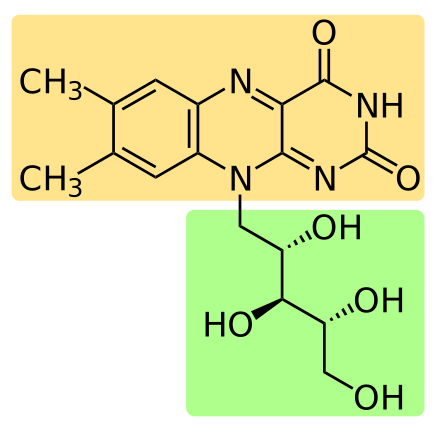
Riboflavin, also known as vitamin B2, is an easily absorbed, water-soluble micronutrient with a key role in maintaining human health. Riboflavin is an orange powder, and water solutions have intense greenish yellow fluorescence. Vitamin B2 is a water-soluble vitamin, one that cannot be stored by the body except in insignificant amounts. It must be replenished daily.
Like the other B vitamins, it supports energy production by aiding in the metabolising of fats, carbohydrates, and proteins. Vitamin B2 is also required for red blood cell formation and respiration, antibody production, and for regulating human growth and reproduction. It is essential for healthy skin, nails, hair growth and general good health, including regulating thyroid activity.
Riboflavin or vitamin B2 is an essential nutrient in human nutrition and plays a key role in the production of energy. Vitamin B2 is needed to process amino acids and fats, activate vitamin B6 and folic acid, and help convert carbohydrates into the fuel the body runs on. Under some conditions, vitamin B2 can act as an antioxidant. Vitamin B2 is an intermediary the transfer of electrons in the cellular oxidation-reduction reactions which generate energy from protein, carbohydrate and fat. The riboflavin coenzymes are also important for the transformation of vitamin B6 and folic acid into their respective active forms, and for the conversion of tryptophan into niacin. Riboflavin is involved in energy production as part of the electron transport chain that produces cellular energy.
Vitamin B2 (riboflavin) functions, uses, and health benefits
Riboflavin is an integral component of the coenzymes that participate in many energy-yielding metabolic pathways. Like its close relative vitamin B1 (thiamine), riboflavin plays a crucial role in certain metabolic reactions, particularly the conversion of carbohydrates into sugar, which is "burned" to produce energy. They promote the first steps in the metabolism (breakdown and production) of glucose and of fatty acids. The metabolism of some vitamins and minerals also require riboflavin. Riboflavin is essential for tissue respiration and the generation of energy from the carbohydrates, acids and fats. It is important for body growth and red blood cell production and helps in releasing energy from carbohydrates.
Riboflavin is required for the flavin coenzymes FAD and FMN, which the body uses in energy metabolism and in the recycling of glutathione. In the treatment of anemia, adding Vitamin B2 to iron supplements has shown to increase its effectiveness. Vital to maintaining a proper metabolism, riboflavin also helps to shore up the immune system by reinforcing antibody reserves, the body's first line of defense against infection. Along with iron, riboflavin is essential for producing the red blood cells that carry oxygen throughout the body. In addition, the body uses extra riboflavin to keep tissue in good repair and speed healing of wounds, burns and other injuries.
Along with such B vitamins as vitamin B6 and niacin (which it helps the body convert into active forms), riboflavin protects the nervous system. It may therefore have a role to play in treating nervous system conditions such as numbness and tingling, Alzheimer's disease, epilepsy, multiple sclerosis, and even anxiety, stress, and fatigue. Carpal tunnel syndrome may benefit from a treatment program including this vitamin when combined with vitamin B6. The body needs vitamin B2 for reproduction and it also enhances the immune system's ability to fight disease.
Riboflavin is vital for normal reproduction, growth, repair and development of body tissues including the skin, hair, nails, connective tissue and immune system. Riboflavin (vitamin B2) works with the other B vitamins. Dietary and supplemental vitamin B2, along with other nutrients is important for normal vision and prevention of cataracts. Riboflavin's ability to improve the skin's secretion of mucus may aid in clearing up skin pustules associated with rosacea.
Vitamin B2 (riboflavin) dosage, intake, recommended daily allowance (RDA)
The RDA for riboflavin varies according to weight, metabolic rate, growth, and caloric intake. Riboflavin requirement must equal to the total energy needs and metabolism. The recommended daily allowance (RDA) for riboflavin is 1.3 mg/day for an adult man and 1.1 mg/day for an adult woman. The amounts found in many multivitamin supplements (20–25 mg) are more than adequate for most people. Women that are pregnant require and additional 0.3 mg per day and those that are lactating require an additional 0.5 mg per day.
Sources of vitamin B2 (riboflavin)
Sources of riboflavin include organ meats (liver, kidney, and heart) and certain plants such as almonds, mushrooms, whole grain, soybeans, and green leafy vegetables. The richest sources of riboflavin include organ meats such as liver, kidney and heart. Milk, yeast, cheese, oily fish, eggs and dark green leafy vegetables are also rich sources. Flour and cereals are enriched with riboflavin. Riboflavin is stable when heated but will leach into cooking water. It is easily destroyed by light, and foods stored in clear containers will lose their riboflavin content in a short period of time.
Because riboflavin is destroyed by exposure to light, foods with riboflavin should not be stored in glass containers that are exposed to light. Breads and cereals are often fortified with riboflavin. Because riboflavin is destroyed by exposure to light, foods with riboflavin should not be stored in glass containers that are exposed to light.
Riboflavin (vitamin B2) is found in a variety of food sources, however, in small amounts. The most abundant sources of this vitamin are milk, milk products and liver. Other food sources of riboflavin are oysters, lean meat, green leafy vegetables, mushrooms, asparagus, broccoli, avocados, Brussels sprouts and salmon. rewer’s yeast is the richest natural source of vitamin B2. Liver, tongue, and other organ meats are also excellent sources. Oily fish, such as mackerel, trout, eel, herring, and shad, have substantial levels of riboflavin, too. Nori seaweed is a fine source. Milk products have some riboflavin, as do eggs, shellfish, millet and wild rice, dried peas, beans, and some seeds such as sunflower.
High levels of vitamin B2 are found in cheese, egg yolks, almonds, organ meats, whole grains, wild rice, soybeans, milk, spinach, mushrooms, almonds, and poultry. The best sources of riboflavin include brewer's yeast, almonds, organ meats, whole grains, wheat germ, wild rice, mushrooms, soybeans, milk, yogurt, eggs, broccoli, brussel sprouts, and spinach. Flours and cereals are often fortified with riboflavin. Brewer’s yeast is the richest natural source of vitamin B2. Liver, tongue, and other organ meats are also excellent sources. Oily fish, such as mackerel, trout, eel, herring, and shad, have substantial levels of riboflavin, too.
Nori seaweed is also a fine source. Milk products have some riboflavin, as do eggs, shellfish, millet and wild rice, dried peas, beans, and some seeds such as sunflower. Other foods with moderate amounts of riboflavin are dark leafy green vegetables, such as asparagus, collards, broccoli, and spinach, whole or enriched grain products, mushrooms, and avocados. Lower levels of vitamin B2 are found in cabbage, carrots, cucumbers, apples, figs, berries, grapes, and tropical fruits.
Other foods with moderate amounts of riboflavin are dark leafy green vegetables, such as asparagus, collards, broccoli, and spinach, whole or enriched grain products, mushrooms, and avocados. Lower levels of vitamin B2 are found in cabbage, carrots, cucumbers, apples, figs, berries, grapes, and tropical fruits. Riboflavin is reported to be stable to heat, therefore, it is least likely lost during cooking. However, baking soda is reportedly destructive to the vitamin stability when it is added during cooking. In addition, because this vitamin is sensitive to light, the storage of such foods in clear containers may destroy the vitamin.
Vitamin B2 (riboflavin) deficiency
Riboflavin deficiency has profound effects on the metabolism of carbohydrates, fats, and protein. All three of these basic food elements require riboflavin if they are to be properly utilized by the body. A deficiency of vitamin B2 (riboflavin) may result in bloodshot eyes, abnormal sensitivity to light, itching and burning of the eyes, inflammation in the mouth, a sore and burning tongue, and cracks on the lips and in the corners of the mouth. It may also result in dull or oily hair, an oily skin, premature wrinkles on the face and arms, and split nails. Riboflavin deficiency also leads to the malfunctioning of the adrenal glands.
Vitamin B2 deficiency can occur in alcoholics. Riboflavin deficiency also occurs in those with chronic liver disease, chronic alcoholics and those who receive total parenteral nutrition (TPN) with inadequate riboflavin. Deficiency of riboflavin is primarily manifested in the skin and mucous membranes. Characteristic symptoms of riboflavin deficiency include lesions of the skin, especially in the corners of the mouth, and a red, sore tongue. The first signs and symptoms of deficiency are a sore throat and sores at the corners of the mouth. Worsening symptoms include a swollen tongue, seborrheic dermatitis, anemia and impaired nerve function.
Vitamin B2 is a water-soluble vitamin needed to process amino acids and fats, activate vitamin B6 and folic acid, and help convert carbohydrates into the fuel the body runs on adenosine triphosphate (ATP). Under some conditions, vitamin B2 can act as an antioxidant. Riboflavin works with the other B vitamins. It is important for body growth and red cell production, and helps in releasing energy from carbohydrates. Vitamin B2 plays an important role in releasing energy from carbohydrates, fats and proteins.
It also helps to maintain the integrity of red blood cells and nervous system function. Vitamin B2 regenerates glutathione, a powerful antioxidant that is one of the main protectors of the body's cells against free-radical damage. Riboflavin is involved in energy production as part of the electron transport chain that produces cellular energy.
Riboflavin deficiency also leads to the malfunctioning of the adrenal glands. It can be contributing cause to such disorders as anaemia, vaginal itching, and cataract. Vitamin B2 deficiency can occur in alcoholics. Also, a deficiency may be more likely in people with cataracts, or sickle cell anemia. People with chronic fatigue syndrome may be deficient in vitamin B2. In developing countries, riboflavin deficiency has been found to be a risk factor for the development of preeclampsia in pregnant women.
The most common cause of riboflavin deficiency is dietary inadequacy, which occurs in those who do not consume rich dietary sources of the vitamin, such as organ meats, eggs, milk, cheese, yogurt, leafy green vegetables and whole grains. Riboflavin deficiency is usually due to dietary inadequacy but can occur most frequently in people with long-standing infections, liver disease, and alcoholism. Deficiency of the vitamin can occur in the elderly subsisting on tea or coffee, toast and cookies. Riboflavin deficiency also occurs in those with chronic liver disease, chronic alcoholics and those who receive total parenteral nutrition (TPN) with inadequate riboflavin.
Marginal riboflavin deficiency, in the context of nucleoside analog antiretroviral therapy, has been known to cause severe lactic acidosis. Riboflavin deficiency occurs when the chronic failure to eat sufficient amounts of foods that contain riboflavin produces lesions of the skin, lesions of smooth surfaces in the digestive tract, or nervous disorders. People taking antipsychotic or antidepressant drugs or oral contraceptives are susceptible to riboflavin deficiency.
Worsening symptoms include a swollen tongue, seborrheic dermatitis, anemia and impaired nerve function. Though severe deficiencies of vitamin B2 are not prevalent, moderate deficiencies are found quite often and are most common among the elderly population. Low dietary levels of riboflavin have been linked to certain esophageal cancers. Riboflavin deficiency has been associated with an increased incidence of esophageal cancer in certain parts of the world.
Riboflavin deficiency can cause inflamed tongue, inflammation and ulcers in the mouth, Dandruff, weakness, abnormal blood vessel growth on the sclerae (whites of the eyes), and low blood counts. Vitamin B2 deficiency include cracking of the lips and corners of the mouth, an inflamed tongue, loss of visual perception and sensitivity to light, cataracts, and burning and/or itching of the eyes, lips, mouth, and tongue. Symptoms of riboflavin deficiency include sore throat, redness and swelling of the lining of the mouth and throat, cracks or sores on the outsides of the lips and at the corners of the mouth, inflammation and redness of the tongue, a moist, scaly skin inflammation, and a decreased number of red blood cells.
Other possible symptoms include dizziness, hair loss, insomnia, poor digestion, and slowed mental response.
Vitamin B2 (riboflavin) overdose, toxicity, side effects
There is no known toxicity to riboflavin. Because riboflavin is a water-soluble vitamin, excess amounts are easily excreted by the body in the urine. Possible reactions to very high doses may include itching, numbness, burning or prickling sensations, and sensitivity to light. Excess riboflavin excreted in the urine causes it to become bright yellow in color, which many people notice when they take B vitamin supplements.